



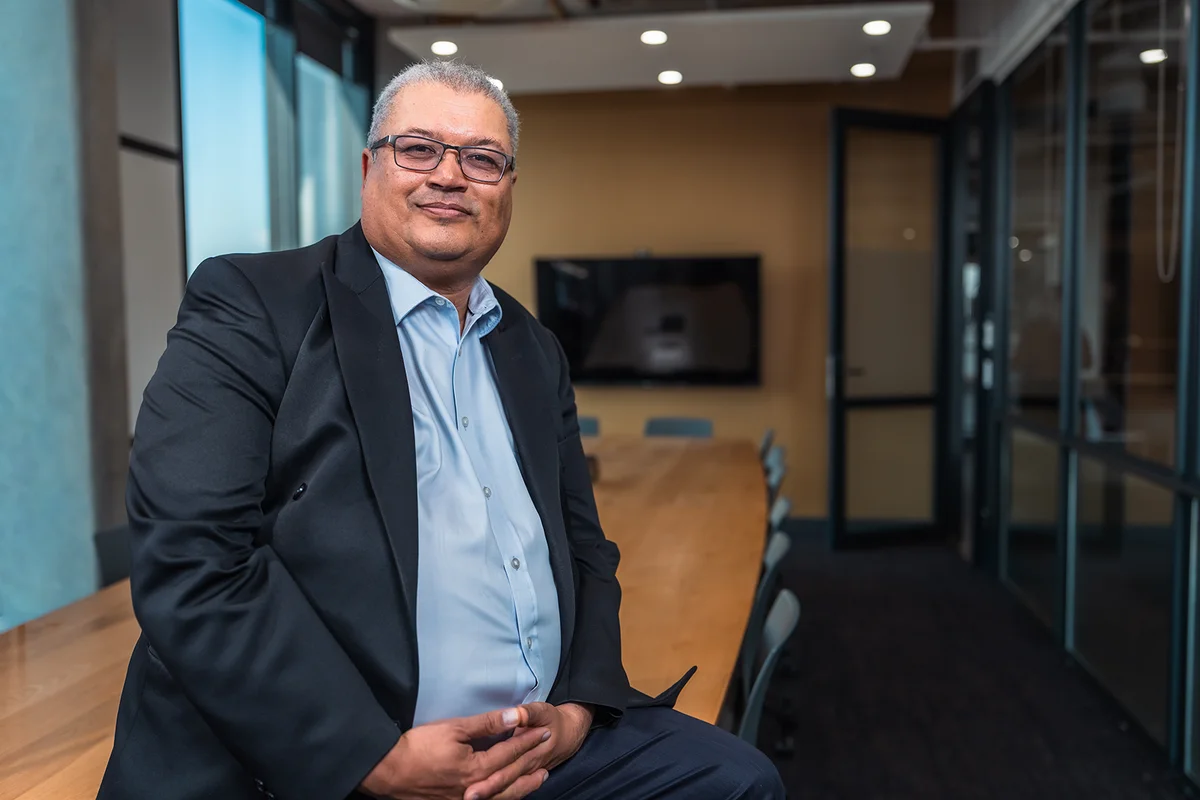
By Gareth Jasson, Executive Associate at Change Logic
In a past life, I was an executive at a large bank. One lunchtime, I headed down to the canteen to get something to eat. Most of my executive colleagues had their PAs deliver lunch to their desks, but I always preferred getting out of the office and spending time with the people doing the work.
I spotted a few members of my broader team, collected my food and sat down with them. What happened next was fascinating. People around us began looking uncomfortable, and the space near our table slowly emptied.
It turned out that some of these employees had never seen an executive eat in the canteen with ordinary staff. No written rule prevented it, but everyone understood that executives occupied a different world. By sitting at that table, I had unwittingly broken one of the organisation’s unwritten rules.
When executives try to change an organisation, they often underestimate how powerful that system has become.
The organisation on paper and the one people work in
Every organisation has its formal structures and processes. An organisational chart tells us who reports to whom. Policies explain how decisions should be made, while strategies set out what the business is trying to achieve. All very useful, but none necessarily reflects how work actually gets done.
Spend enough time inside a large organisation, and you begin to recognise the difference. You discover who people consult before making a decision, whose opinion carries weight regardless of their job title, and which processes nobody questions because they have always been there. This is what I call The System.
I often use The Matrix movie as an analogy because its depiction of people becoming dependent on a system, then defending it, feels remarkably familiar in organisational life. The interesting thing is that the people protecting the system are not necessarily doing anything they consider wrong. They are simply behaving in ways that experience has taught them will help them succeed.
Why the middle has so much influence
Middle managers translate strategy into everyday activity. They make hiring decisions, allocate resources, issue instructions and decide which priorities get attention. They also have enormous influence over how employees experience the organisation.
An executive team can spend months developing a new strategy, communicating it beautifully, and securing agreement from every senior leader. But the middle layer largely determines what happens when everyone returns to their desks.
The difficulty arises when the behaviour the organisation has historically encouraged differs from what its new strategy requires.
Consider a manager who has spent years being recognised for maintaining stability, protecting their department’s resources and ensuring that every decision follows the established approval process. The executive team suddenly announces a transformation programme and expects that same manager to become more entrepreneurial, work across organisational boundaries and make decisions faster.
I have been part of that middle layer myself. I understand the instinct to expand your area of responsibility, ask for additional resources and protect the processes you have worked hard to establish. At the time, those decisions can seem perfectly reasonable.
The system did not create itself
When transformation stalls, executives often blame middle management for resisting change. I think they would do better to examine the conditions that encouraged the behaviour they now complain about.
Who approved the organisational structures? Who established the performance measures? Who rewarded managers for building larger teams or maintaining control over decisions? And who allowed processes to become so complicated that changing something relatively simple requires several layers of approval?
The uncomfortable answer is that executive leadership enabled much of this. It may have developed over many years and under several different leadership teams, but the organisation has learnt what those at the top are prepared to tolerate and reward. If the system continues to reward the old behaviour, the old behaviour will survive.
You cannot manage what you do not understand
One of the first things I encourage executives to do is look beyond the organisational chart. Find out how decisions really move through the business. Understand who influences whom, where work gets stuck and why people have developed particular ways of doing things.
I strongly believe in conversations in canteens, at coffee stations, and wherever people feel comfortable enough to speak openly. You can learn an extraordinary amount about an organisation by listening to people explain the difficulties they encounter while doing their jobs.
Of course, listening is only part of the exercise. You also need to examine the processes, identify unnecessary approvals, and assess whether performance measures support what the business is trying to achieve.
I would rather understand why a sensible person follows an apparently ridiculous process than simply instruct them to stop. Once you understand the reasoning behind the behaviour, you have a much better chance of changing it.
Leadership must become personal again
The trouble is that many executives have become too far removed from the people responsible for implementing their decisions. They rely on reports, formal meetings and layers of management to understand what is happening inside their organisations, often without realising how much of the real story never reaches them.
People need to believe they can challenge established practices without damaging their careers. They need leaders who understand the operational consequences of the decisions being made at the top and who will support them when those decisions require uncomfortable changes.
I also believe executives must acknowledge their own contribution to the problem. It is difficult to ask people to challenge long-established behaviour when the leadership team remains unwilling to examine its own.
None of this removes the need for accountability. Some people will always resist necessary change, and executives must be prepared to address it. But there is a considerable difference between someone deliberately obstructing progress and someone responding logically to the environment in which they have been expected to operate.
Before blaming middle management for protecting the status quo, executives should consider what they have spent years teaching those managers to protect.
Also Read: You cannot change culture without changing how the business works
For these and more stories, follow us on X (Formerly Twitter), Facebook, LinkedIn and Telegram. You can also send us tips or reach out at [email protected].
