



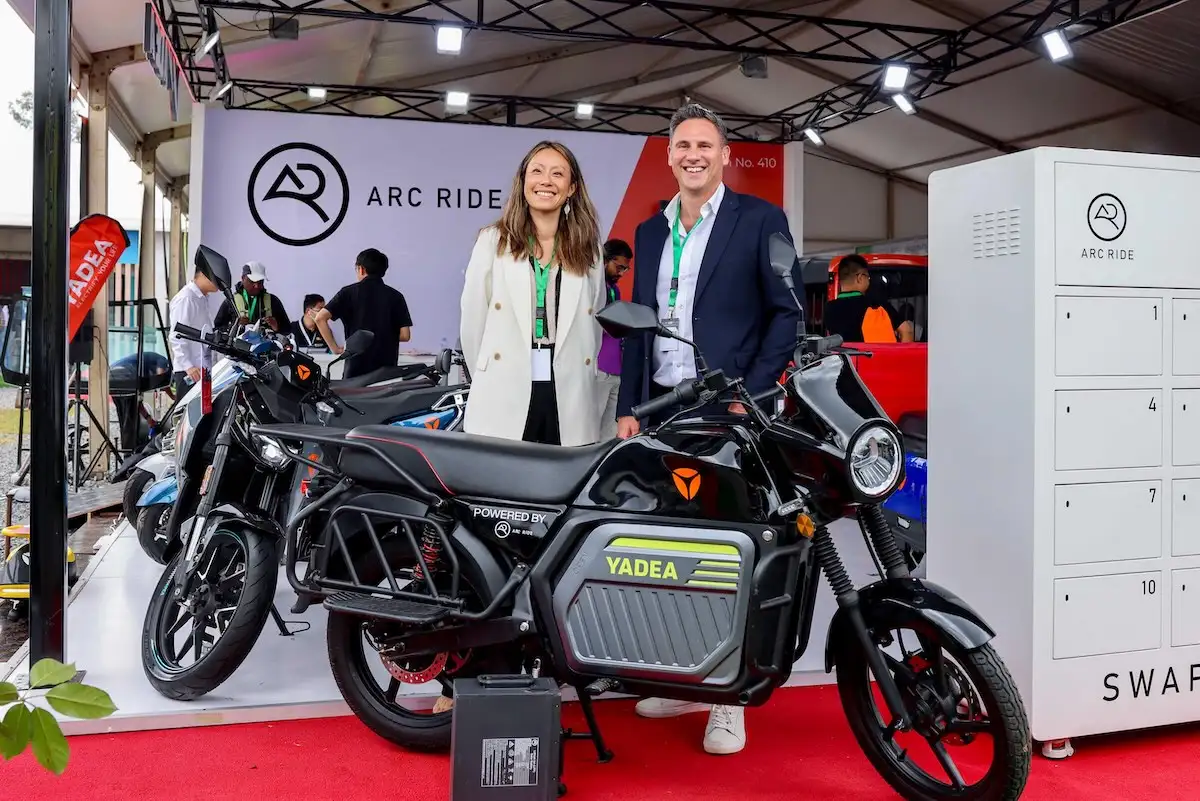
ARC Ride is ready to take its battery-swapping model beyond Nairobi after securing $33.3 million in funding. This is one of the highest amounts raised in the EV space in Kenya recently.

The funding will be used to expand ARC Ride’s electric motorcycle fleet, deploy battery-swapping infrastructure and even support expansion into Ghana, Uganda, Tanzania and South Africa.
The company is now focused on building the infrastructure that keeps those motorcycles moving.
ARC Ride founder and CEO Jo Hurst-Croft told TechArena that the company is targeting around 5,000 electric motorcycles within each market ecosystem. The new funding will initially support deployments of about 2,000 motorcycles and the infrastructure required to support them.
“We’re putting in hundreds of swapping stations and batteries for thousands of bikes,” Hurst-Croft said.
From Nairobi to Western Kenya
Kenya is still central to the expansion strategy. ARC Ride plans to extend its operations from Nairobi into Western Kenya. The company has been testing its model in the region for the past six months and plans to build its initial ecosystem around Kisumu before expanding towards other urban centres such as Bungoma and Eldoret.
Hurst-Croft said ARC Ride views its markets as ecosystems rather than attempting to immediately build infrastructure across every rural area.
“ARC Ride is never going to be a solution for every boda rider in rural areas,” he said.
The company’s main focus is on areas with high rider density to support the infrastructure required for battery swapping.
How ARC Ride’s battery-swapping model works
A rider purchases or finances the motorcycle, while ARC Ride retains ownership of the battery. This means riders do not have to finance the battery as part of the motorcycle purchase.
“The battery is the fuel that you keep coming back to,” Hurst-Croft explained.
At an automated ARC Ride swapping cabinet, a rider scans a QR code or uses an RFID-enabled system. The cabinet opens an empty slot where the depleted battery is to be placed and releases a charged battery.
Riders do not pay a fixed fee for every swap they do. The system first calculates the difference between the energy in the returned battery and the energy supplied in the replacement.
If a rider returns a battery at 20% charge and receives one at 95%, they will only pay for the 75% difference.
15,000 swaps a day
ARC Ride currently has nearly 300 automated battery-swapping cabinets across Nairobi and is processing more than 15,000 swaps per day, according to Hurst-Croft.
Hurst-Croft said ARC Ride combines real-time usage data and predictive modelling with direct feedback from riders to identify demand hotspots.
“We use the data to really determine whether riders are using the bikes and building the infrastructure along that,” he said.
One of ARC Ride’s arguments for its model is that riders should not have to manage the entire lifecycle of an expensive EV battery. The company manages battery monitoring, maintenance and eventual replacement.
Battery Interoperability
Battery interoperability remains one of the more complicated issues in Africa’s electric mobility market. Hurst-Croft said the industry is evolving too quickly for governments to lock in a single technical standard prematurely even though standardisation could allow riders to access a wider network of batteries and swapping stations.
ARC Ride is taking an open approach to its own battery infrastructure. The company is working with manufacturers including Yadea and expects other motorcycle brands to use the same battery infrastructure.
“It’s not going to be fully standardised, but it’s fully open,” Hurst-Croft said.
ARC Ride is betting on building sufficiently dense networks within major urban and regional ecosystems to make electric motorcycles a practical commercial alternative.
“We want to be number one across cities rather than a boda for everyone everywhere,” he said.
For these and more stories, follow us on X (Formerly Twitter), Facebook, LinkedIn and Telegram. You can also send us tips or reach out at [email protected].
Also Read: M-KOPA Finances Over 10,000 Electric Motorbikes in Kenya
