


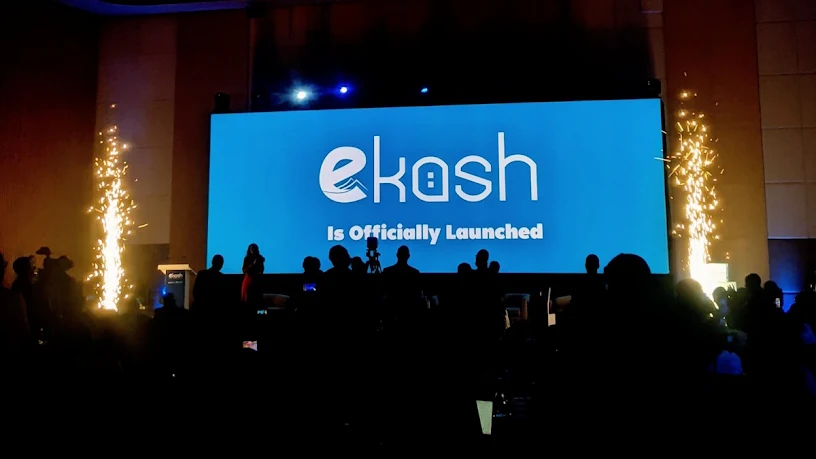
Rwanda has announced the nationwide rollout of eKash. This is the country’s national instant payment system.
As of 14 July 2026, all interoperable retail payment transactions between banks and electronic money issuers are processed through eKash.
So what exactly is eKash, how does it work and why does it matter?
What is eKash?
It is Rwanda’s national digital payment system for instant money transfers working between participating banks and mobile money providers. It makes it easier for customers to instantly send and receive funds between providers, without the need to be on the same bank or mobile money provider.
Why was eKash introduced?
Moving money between different financial institutions mostly involves multiple systems, delays or higher costs.
With eKash, Rwanda is creating a unified payments infrastructure. It aims to make digital payments faster, simpler, more affordable, more secure and more inclusive.
Interoperable payment systems are a critical building block to increase financial inclusion and build a more connected digital economy,” said the National Bank of Rwanda.
Rwanda hopes to reduce friction in digital transactions while encouraging greater use of electronic payments over cash by placing all domestic interoperable retail payments on one national platform.
How does eKash work?
eKash connects banks and electronic money issuers on one interoperable network. Instead of every institution maintaining isolated payment connections, they all connect to the same national infrastructure operated by RSwitch.
For consumers, the experience remains almost identical as they continue using their existing banking or mobile money services.
What can you do with eKash?
The platform facilitates various types of transactions such as;
Bank to Bank transfers
Bank to Mobile Wallet transfers
Mobile Wallet to Bank transfers
Mobile Wallet to Mobile Wallet transfers
Merchant payments across participating financial institutions
One of the key features is that customers can pay merchants using their preferred bank account or mobile wallet, regardless of the institution that issued the merchant payment code.
How much does eKash cost?
According to the National Bank of Rwanda, the maximum fee charged for a person-to-person transfer through eKash is FRW 20 per transaction.
Financial institutions are free to charge less or even waive the fee entirely as part of their own pricing strategies.
What are the transaction limits?
The maximum transaction amount supported through eKash is FRW 10 million per transaction.
Individual banks and electronic money issuers may impose lower transaction or daily limits based on their own risk and operational policies.
Do I need to download a new app?
No. One of eKash’s biggest advantages is that customers do not need to change how they bank.
Users continue accessing services through their existing:
- Mobile banking apps
- Mobile money apps
- Internet banking platforms
- USSD services
There is no new registration, no separate eKash account and no additional application to install. For most users, the transition happens automatically in the background.
Is eKash safe?
Yes. eKash is operated by Rwanda’s national electronic payments switch (RSwitch), under the oversight of the National Bank of Rwanda (NBR).
The central bank continues to monitor system reliability, transaction performance, customer protection, operational readiness and complaint resolution.
Importantly, customer funds remain within Rwanda’s regulated financial system. eKash simply provides the infrastructure that enables money to move between institutions more efficiently.
Why eKash matters
The launch of eKash represents a significant upgrade to Rwanda’s financial infrastructure.
National instant payment systems are increasingly becoming the backbone of modern digital economies because they help reduce dependence on cash, improve financial inclusion, lower transaction costs, encourage digital commerce and simplify interoperability between financial institutions.
How eKash compares with other national payment systems
Rwanda joins a growing list of countries investing in national instant payment infrastructure.
| Feature | eKash (Rwanda) | PesaLink (Kenya) | UPI (India) | Pix (Brazil) |
|---|---|---|---|---|
| National payment rail | ✅ | ✅ | ✅ | ✅ |
| Instant transfers | ✅ | ✅ | ✅ | ✅ |
| Bank-to-bank transfers | ✅ | ✅ | ✅ | ✅ |
| Bank-to-mobile wallet | ✅ | Limited | Supported through participating apps | Varies |
| Wallet-to-wallet transfers | ✅ | No | Supported via participating providers | Limited |
| Merchant payments | ✅ | Limited | Extensive | Extensive |
| Central infrastructure | RSwitch | IPSL | NPCI | Central Bank of Brazil |
Frequently Asked Questions (FAQs)
Is eKash a mobile wallet?
No. eKash is not a wallet or banking app. It is the national payment infrastructure that allows banks and mobile money providers to transfer money between one another instantly.
Can I send money from my bank account to a mobile wallet?
Yes, eKash supports transfers between bank accounts and electronic money wallets.
Do I need to download a new app?
No. Customers continue using their existing banking and mobile money applications, internet banking platforms or USSD services.
Who operates eKash?
eKash is operated by RSwitch, Rwanda’s national electronic payments switch. All this is under the supervision of the National Bank of Rwanda.
How much does it cost to use eKash?
The maximum fee for a person-to-person transfer is FRW 20. Financial institutions can still charge less or offer free transfers.
For these and more stories, follow us on X (Formerly Twitter), Facebook, LinkedIn and Telegram. You can also send us tips or reach out at [email protected].
Also Read: Pesalink Partners PAPSS to Enable Instant Cross-Border Payments in Local Currencies
