



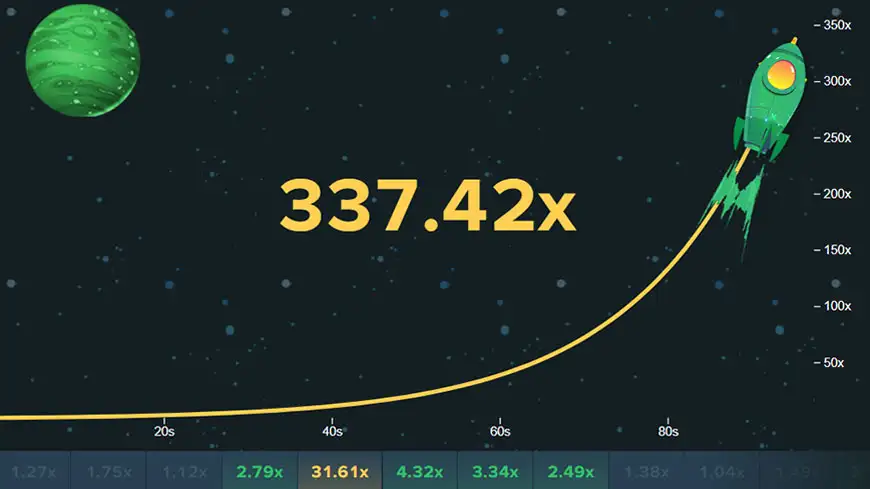
Most games rely on clear breaks. A round ends, the screen resets, and everything starts again. Aviator does not work that way. Its appeal comes from continuity. The experience keeps moving, and the system is built to support that flow without forcing hard stops or visual resets.

You can see this straight away when opening the Aviator game. There is no sense of loading into a fresh scene each time. Motion carries over. Timing feels shared. The experience behaves more like a live system than a sequence of rounds, and that difference is intentional.
Continuous State Changes How Interaction Works
At the heart of Aviator is a continuous state model. Instead of resetting the environment after each outcome, the system updates its state in place. One moment flows into the next without clearing the screen or reloading elements.
From a technical point of view, this means the interface is always aware of where it is in the timeline. Actions are tied to specific windows rather than turns. When a round ends, the state shifts forward instead of snapping back to zero. That approach keeps the experience cohesive and avoids breaking attention.
Clear Phases Replace Hard Resets
Without resets, the system still needs structure. Aviator handles this by separating phases rather than scenes, something that becomes clear when accessed through platforms like Betway. There is a phase where actions are allowed, a phase where outcomes are locked, and a brief transition before the next cycle begins.
These phases are communicated through behaviour, not explanation. Buttons change availability. Visual cues shift subtly. Players always know whether they can act or need to wait, even though the screen itself stays largely the same.
Interfaces Stay Fixed on Purpose
One reason continuous state works here is layout discipline. Core interface elements do not move. Controls remain in the same position. Information updates in place instead of appearing somewhere new.
This fixed layout helps users stay oriented. When nothing jumps around, the brain spends less energy reinterpreting the screen. The experience feels steady, even as the underlying state keeps changing.
Timing Is Treated as a Shared Resource
In continuous systems, timing is everything. Aviator treats time as a shared reference point rather than something individual to each user. Everyone sees the same progression and the same transitions.
That shared timing builds trust. Actions feel fair because they are anchored to the same moment for everyone involved. From a system perspective, this requires tight coordination between the interface and the underlying game logic so that state changes are reflected cleanly and consistently.
Platform Integration Supports Continuity
When a game behaves this way, platform stability matters. Aviator is often accessed through larger environments, and those environments need to respect its continuous nature.
On platforms like Betway, the game is presented without interrupting its flow. Navigation into and out of the game is smooth, and the surrounding interface does not force unnecessary reloads. That allows the continuous state to feel intact rather than fragile.
Why Continuous State Feels Different
The absence of resets changes how the experience feels. There is less friction and less waiting. Attention stays focused because there is no repeated setup to sit through.
This design choice also reduces fatigue. Instead of starting over again and again, players remain inside a single, evolving system. The experience feels more like following a live feed than playing a series of disconnected rounds.
A System Built to Keep Moving
Aviator works because it does not keep dragging the experience back to the start. The game moves forward instead of resetting, which makes everything feel calmer and easier to follow from one moment to the next.
The tech stays out of sight and does its job without drawing attention. What you are left with is a steady flow that carries the experience forward without breaking it up.
