



Retirement planning in Kenya has largely centred on accumulation for decaded, encouraging workers to save consistently during their earning years. As pension assets grow and life expectancy rises, a new challenge is gaining attention. This relates to how retirees sustainably draw income after leaving formal employment.
This shift is industry observers describe as the emergence of the “decumulation era”. This is a phase where income sustainability, flexibility and longevity risk management are the most important factors.
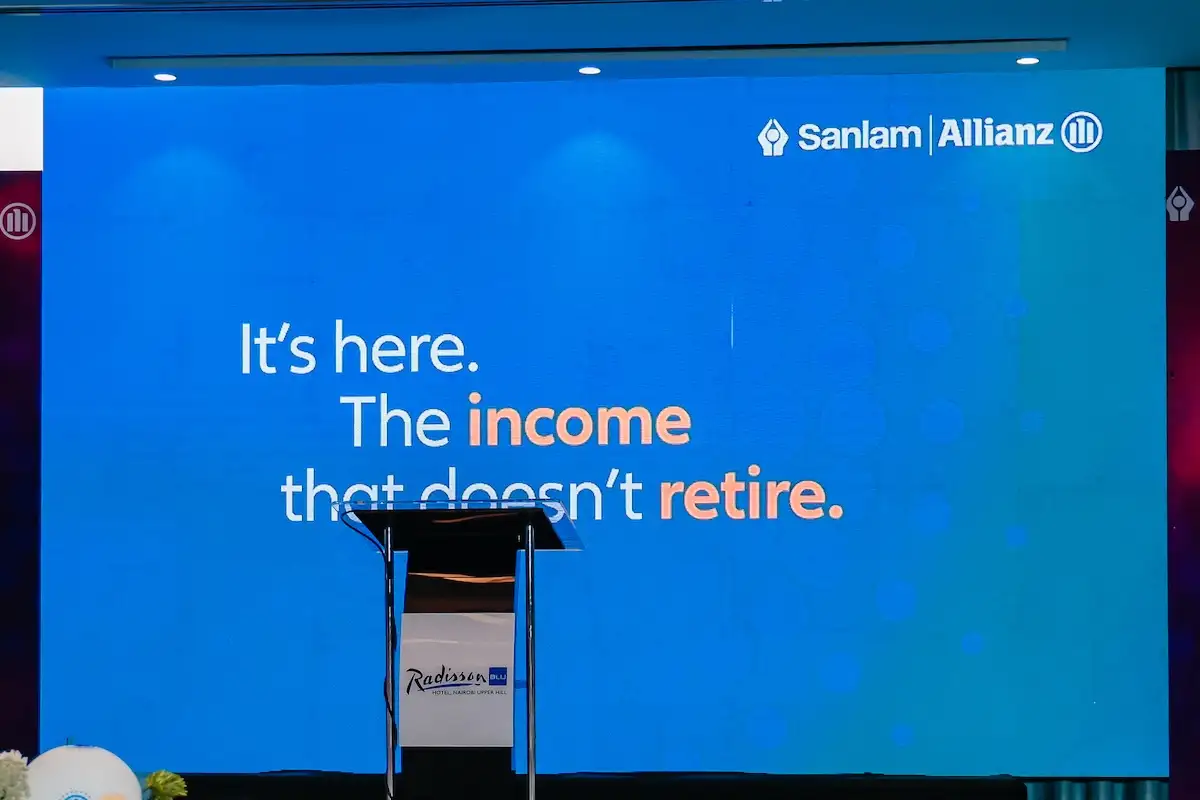
Recent product developments in the market, including the launch of income drawdown funds by insurers such as SanlamAllianz Life Insurance, show that the industry is recognizing that retirement security extends beyond simply building pension balances.
The Three Phases of Retirement Finance
Retirement financing typically fits into these three stages
- Accumulation where ndividuals save and contribute to pension schemes during their working years.
- Growth as investments compound over time to build adequate retirement capital.
- Consumption (Decumulation) letting retirees depend on accumulated savings to sustain income throughout retirement.
Regulatory reforms and financial innovation have help strenghten accumulation mechanisms in Kenya but the consumption phase is increasingly under scrutiny.
Industry data shows that most retirees who choose to get full lump-sum withdrawals often exhaust their savings within a few years.
Retirees have traditionally been able to choose between taking lump-sum payments or converting their savings into annuities that will provide them with guaranteed income.
Both models have their own trade-offs. Lump sums offer flexibility but they also expose retirees to depletion risk while on the other hand annuities ensuire predictable income but limit access to capital.
SanlamAllianz for example recently introduced Income Drawdown Fund that allows retirees to receive structured payouts. The remaining capital will continue earning returns within an investment fund. This is also subject to withdrawal limits that are aligned with Retirement Benefits Authority (RBA) guidelines.
RBA provisions allow annual withdrawals in such structures to be capped at 12% of the remaining balance. This can help preserve capital over time.
Kenya’s retirement landscape is also shaped by its labour market structure. Pension inclusion is a top priority since a bigger part of the population in the country is in the informal sector.
Digital platforms including mobile-based pension onboarding tools are expanding access across the country. They also allow micro-contributions, account consolidation and retirement simulations. There is growing interest from informal sector savers and this also shows their is increased awareness around long-term financial planning.
The sustainability of income drawdown models in the long term depend on prudent investment management and strong capital positions.
Providers have to balance between delivering competitive returns while at the same time protecting capital during market volatility. Capital adequacy ratios and risk management frameworks therefore play a very important role in maintaining trust in the retirement ecosystem.
Income drawdown products, including what SanlamAllianz launched, show that the industry is leaning more towards flexibility, longevity planning and income resilience.
