


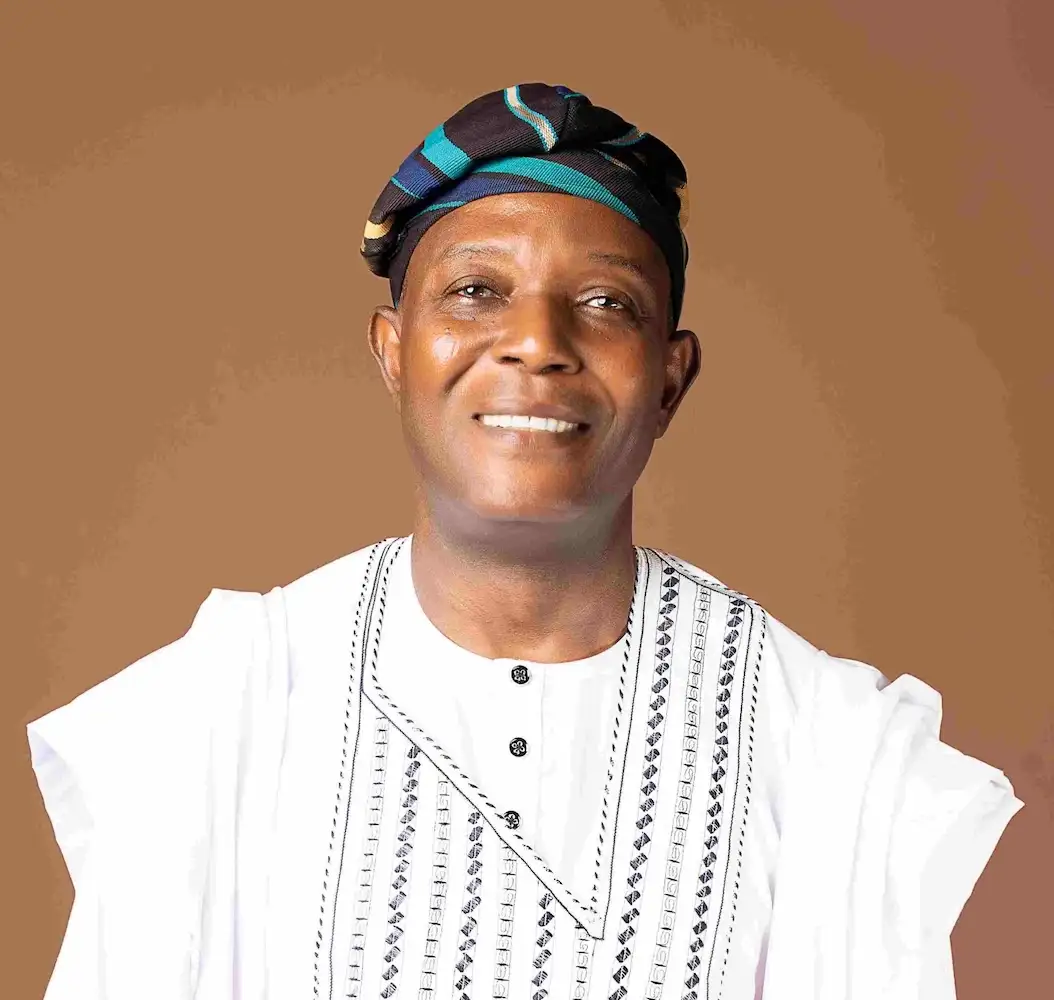
Go to the about section of the LinkedIn profile of Frederick Apeji, Chairman/CEO of Alford Conferences Limited, Publisher of REVENUE Magazine, and the Convener of European African Investors Forum (EAIF), and all you’ll read is his concept called GCM (Global Competitive Mindset). As far as he is concerned African entrepreneurs, no matter the size of their company, must see the entire Earth as a single marketplace on which to operate. He believes that it is this mindset that made Britain, America, and now China to dominate the global economic space at different times from the industrial revolution from 1760 till date. This graduate of English Language, from University of Maiduguri, has had a checkered career taking him from high school teaching, business journalism, press advertising sales, full-time Church Ministry, public relations consulting, and corporate communications from 1990 till 2008 when he chose the path of entrepreneurship. The sheer passion for the dreams he carries in his heart is infectious. August Reporters, a Lagos-based online newspaper, asked him this past week to share with us one of those dreams, which is about attracting €250 billion from European investors into the hands of African entrepreneurs in 2026 and beyond. With due permission from the publication, we have reproduced and published the interview here.


We saw an advert copy promoting your conference which places you side by side with Otto von Bismarck, the famous German leader who led the Berlin Conference of 1884-1885, that formalized the Scramble for Africa and the ultimate colonization of the continent. Are you too planning to lead Africa to colonize Europe?
Hahahaha! Africa to colonize Europe? Far from it! It is not even doable. In all ramifications, Europe is far more powerful than Africa for such a thing to ever happen. And I don’t know any African who, in his right senses, will be contemplating such a wild and crazy thing. Anyway, let me just say that, we have posted so many stories and pictures to promote European African Investors Forum (EAIF) in the past several months now, and I am excited that this particular one caught your attention.
You know, I recall my A-Level days in the early 1980s when my three subjects were History, Government and Christian Religious Studies. History was my favourite, and the lecturer who took us in History was truly very passionate about European History. That was how I got introduced and exposed to European History, and all this knowledge has stayed with me up till this day.
So as far back as my teenage years, I knew about Otto von Bismarck who not only led the Unification of Germany in 1871 but also spearheaded the peaceful colonization of Africa. A few months ago, this idea about Bismarck (the Iron Chancellor of Germany) dropped in my mind, and I briefed our graphics desk to translate it into an advert copy. And what you saw was what came out.
You have shared the story of your school days, but you are yet to answer my question. Are you saying that you want to use EAIF to lead Africa to colonize Europe?No. My vision for EAIF is to use it as a platform to help Europe and Africa to prosper in their respective continents. The Scramble for Africa and the subsequent European colonization of our continent helped Europe to prosper in our continent. This is a fact. For over a century, the United Kingdom, France, Belgium and Portugal fed fat on Africa’s food crops, cash crops, industrial raw materials, and cheap labour to grow their home economies during the colonial era. And no one can deny this.
These Europeans saw vast opportunities in Africa, and they stepped forward to harvest them for their own advantage. There was nothing like the United Nations (UN) then. So nobody could stop them from conquering Africa, or challenge them, or raise an eyebrow against such a grand oppression of one continent by another.
Outside Liberia, which they obviously spared because of its American connection, and outside Ethiopia, that saw the handwriting on the wall very early on, and therefore prepared adequately to fight against and delivered a crushing defeat against the Italian invasion force, the rest of the continent was overpowered with so much ease.
The European imperial powers never sought our permission to come and take possession of Africa. In the same way, I see vast opportunities in Europe today in terms of business capital that could be deployed to fund and grow thousands and millions of micro, small and medium enterprises across Africa. European business capital is also available for Africa’s large corporates.
What stops us today from scheming on how best to bring a good portion of this money from Europe to Africa? Do we need Europe’s permission to do this? In any case, European capital itself continues to seek avenues for its profitable deployment beyond the shores of Europe.
Look at Norges Bank Investment Management (NBIM), for instance, the investment arm of the sovereign wealth fund of Norway, currently valued at about $2.3 trillion. Over the years NBIM has invested in about 7,000 companies globally, owning about 1.5% of all the world’s listed shares. About 70% of its portfolio is in equities. The company holds an important stake in several US tech giants: NVIDIA, Apple Inc. Alphabet the parent company of Google, Amazon Inc. and Microsoft. So all these classes of business capital are available across Europe, and we Africans need to tap into this extensive resource, going about it deliberately, confidently and with shrewdness.
What Africa must do today is to begin to approach Europe with more commonsense, more wisdom, and more tact. Not with grudges or bitterness. The Europeans that colonized Africa and the Africans that were colonized four to five generations ago are all dead. When you look at world history, from recorded times till date, it is the typical story of stronger tribes or nations lording it over weaker ones. Even here in Africa, bigger and stronger tribes historically lorded it over smaller and weaker ones. The Europeans of today therefore do not really owe Africans anything whatsoever.
What’s the point in generally fouling up our own environment in Africa, a situation that pushes millions of our young people into Europe as hapless illegal immigrants, when we can learn how best to tap heavily into European capital and bring it back home to help these youngsters to grow their micro and small businesses?
So we are advocating for a Europe2Africa investment of €250 billion over the next 10 years 2026-2035. Europe has the money. Africa has the vast, often untapped or little-tapped business opportunities. It is therefore a win-win for both continents.
But how viable or realistic is this advocacy that you’re pushing when several of Europe’s top banks like Barclays Bank of the UK and Societe Generale Bank of France have exited the African market in recent years?
You’re right. In the past 10 years, not only Barclays Bank and Societe Generale Bank have exited or retreated from Africa. Others include Standard Chartered Bank, BNP Paribas, Credit Suisse, etc. First of all, you have to accept that these are profit-driven entities which are not duty-bound to remain in a particular market just because they have entered it. So profitability issues and regulatory challenges are the reasons often cited by these banks for reducing their presence in Africa or for exiting altogether.
But whether these European banks keep their subsidiaries in Nigeria and Africa or not, what stops our local banks from reaching out to them for funds which they, in turn, will on-lend to MSMEs across the continent? In June this year, EIB Global, the development arm of European Investment Bank offered €50 million to Nigeria’s Wema Bank, and this was specifically meant for on-lending to MSMEs, especially young and female run ones. Earlier in March 2026, this same EIB Global signed an €85 million agreement with Bank of Industry along this same line, and for this same purpose.
Yes, these are little amounts compared to our advocacy of €250 billion covering 10 years. But what stops many more local banks from Nigeria and the rest of Africa from deliberately exploring this funding window on a far more extensive scale?
Okay. But when these European funds get to Nigerian banks, would the latter really channel them into the hands of MSMEs, or would they just sit down on these funds and keep financing traders with it with the opportunity of quick and easy profits?
The answer to your question would come from the banks themselves. By the way, I have mentioned Wema Bank and Bank of Industry just to illustrate my point about seriously cashing-in on on-lending funds from European entities to support Africa’s young entrepreneurs. You can always reach out to them, and others like them, to hear first-hand what their story is in terms of monies meant for on-lending to MSMEs.
If you probe this subject further, you’ll see many more indigenous African banks that traditionally excel in this area. Lagos-based Africa Finance Corporation (AFC) regularly secures credit lines, syndicated loans and other funding facilities from key European development finance institutions: Cassa Depositi e Prestiti of Italy, DEG of Germany, Proparco of France, etc. In June 2026, AFC received $2 billion, about 35% of it coming from European institutions.
So what we are really looking at for EAIF are those Nigerian and African institutions that have the expertise, the capacity and the reputation to approach Europe for the clear purpose of channeling business capital from there into the hands of viable, bankable, and investment-ready MSMEs in our continent.
You’ve talked about banks. What about the investment promotion agencies? What is their own role in this advocacy running into billions of euros?
Whenever I check online, I see that the investment promotion agencies (IPAs) of many African countries are already well-positioned to key into this advocacy for the benefit of their respective domains. In Nigeria, for instance, I know that we have even taken things a bit higher in terms of how active the subnational IPAs have become in recent times. These state IPAs even have their own association today called FoSIPAN (Forum of State Investment Promotion Agencies of Nigeria).
I think the state governors should put their will-power, their full support, and their goodwill behind their subnational IPA. The Nigerian Investment Promotion Council (NIPC) in Abuja would naturally be looking at the general picture of the country. But it is the IPA of states like Jigawa, Kogi, Gombe, Borno, Zamfara, Kaduna, Katsina, Nasarawa, Benue, Yobe, FCT, Ondo, Anambra, Kebbi, Imo, Rivers, Enugu or Kano that would naturally be far hungrier to scout for foreign investment to pour into the peculiar opportunities within their respective states.
So both the federal and the subnational IPAs should routinely work together in sync on this matter. And the Nigerian diplomatic missions abroad should be fully sensitized and energized to give them full diplomatic backing abroad, as part of their mandate in economic diplomacy.
And mind you, it is not only Nigeria, Ghana, Guinea, Senegal, Kenya, Morocco, Angola, Zambia, DR Congo, etc, that are looking for investments from Europe. Other countries across the developing world are in this same race. So our national and subnational IPAs in Africa must sharpen their teeth and be on top of their game. You can’t just deploy the regular civil servant to run your IPA. If necessary, you must go beyond the public service, to recruit a capable and sound person for this job.
So what is the level of preparedness for the inaugural EAIF?
Compared to what we desire to see on the ground we have only scratched the surface as at today. But then, EAIF is not a 100 metres dash. It is a marathon race. We are starting small, but our vision is audacious and it is long-term. Whatever happens, we plan to be able to birth the 1st European African Investors Forum on November 24-26, 2026. We have extended our initial date for the event by about three weeks. Our preferred host city for this quarterly European cum African investment gathering is actually Lisbon, Portugal. But for this very first outing, we shall be hosting the event in a hybrid format.
The first two days of this conference (24th and 25th November) would be virtual. And on Day 3 (26th November), we would be hosting an in-person executive luncheon in Abuja, Nigeria, to honour the winners of the Lisbonium Awards 2026, a critical part of the quarterly EAIF.
For this inaugural event, we are teaming up with a like-minded company, International Business Consulting (IBC) Limited based both in Angola and Portugal. Dr. Pedro Coelho da Silva, a Portuguese national who runs IBC Limited, has a rich experience in trade and investment facilitation covering both Europe and Africa.
We have also engaged EAIF Country Chancellors for the United Kingdom, Portugal, Nigeria, South Africa, Kenya, Angola, Mozambique, Ghana, Cameroon and South Sudan. When EAIF is full-blown, we look forward to engaging a country chancellor for each of the 48 countries of Europe and the 54 countries of Africa.
Bringing €250 billion from Europe to Africa over the next 10 years is an enterprise that is far bigger than what a single event company like ours can handle successfully and sustainably. Just hosting the event in itself is a piece of cake for any typical event company. But EAIF goes far beyond an event. We want each of our country partners to domesticate this advocacy within their respective domains.
Could you tell us little bit about your own background? Where are you coming from?
Okay. EAIF is owned and organized by Alford Conferences Limited. We incorporated the company in April 2014, and we currently operate here in Nigeria, with a desire to open a subsidiary in Europe in 2027 or so. We typically craft our events around a subject that we can advocate for passionately. In that way, what we are doing becomes bigger than just organizing an event. It becomes an advocacy, and we are able to call others to join in such an advocacy. This is what EAIF is all about.
Our current most successful event is the annual Nigerian States IGR Awards which seeks to spur Nigerian states toward a healthy competition amongst themselves in the area of IGR (internally generated revenue); rather that depending too slavishly on the federal revenue allocations that they receive each month from Abuja.
We believe that the real job of growing the economy of a country lies on the shoulders of the subnational units that make it up. Our experience with this event which has taken our team to the internal revenue service (IRS) of 25 out of the 37 subnationals of Nigeria in the past six years came in handy when we conceived EAIF.
My experience in the Nigerian banking industry from 2003-2008 has also been an eye-opener for me as we embarked on this investment advocacy. One life-time lesson I have learned in my nearly 61 years on Earth, is that, if you plan to do something really big, something that is bigger that you, and something that you want to outlive you, you must pull-in others who are like-minded with you and who can combine their passion with yours to drive such a goal. As the saying goes, “No man is an island.”