


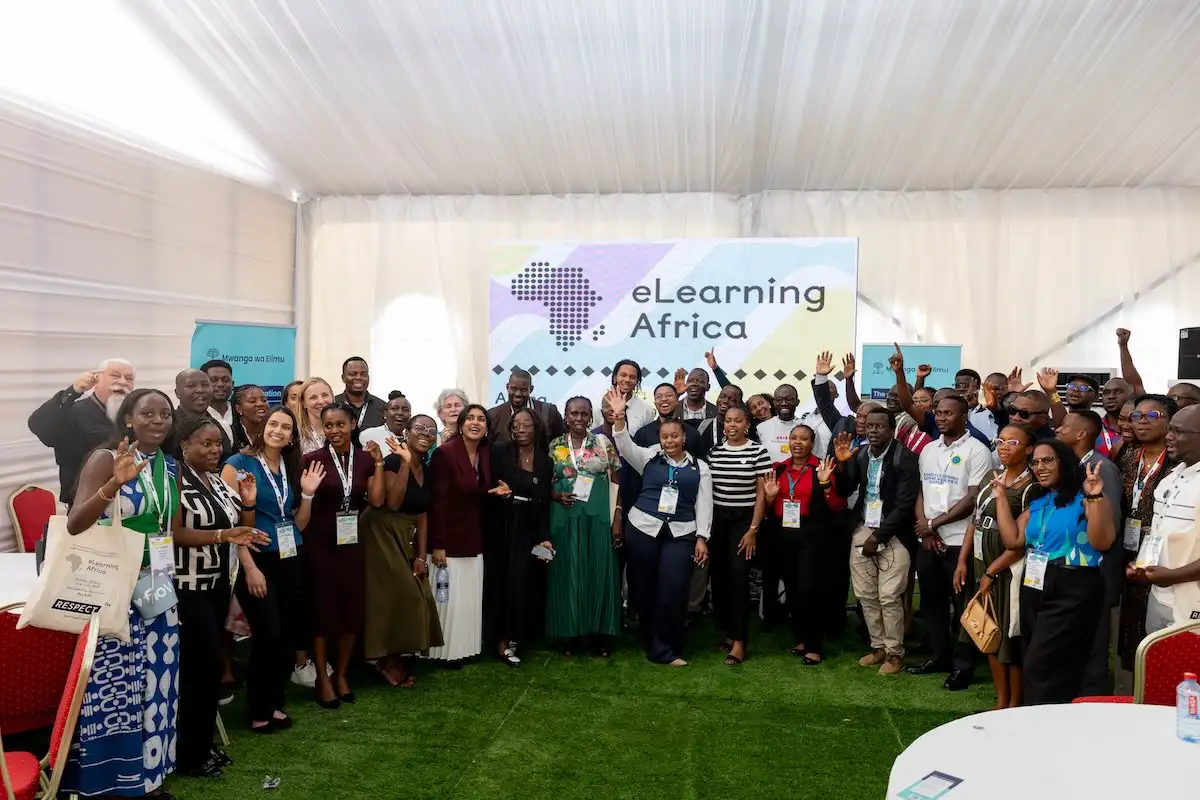
The Mwanga wa Elimu movement held its inaugural public workshop at the eLearning Africa 2026 conference in Accra. The conference brought together policymakers, developers, educators, researchers and funders from across the continent.


The workshop, themed “Light the Way: Join Africa’s EdTech Revolution,” marked two key developments: the official launch of the Africa EdTech Policy Toolkit and the opening of membership for practitioners across Africa.
The initiative is closely tied to the Africa EdTech 2030 Vision and Plan, developed by AUDA-NEPAD and endorsed during the 39th Ordinary Session of the AU Assembly. The plan outlines an ambitious roadmap to create a unified and interoperable digital learning ecosystem. The main goal is to reach 200 million learners with quality digital education by 2030.
Mwanga wa Elimu is Swahili for “Light of Education”. It is the movement that is tasked with translating that vision into action. It will do so by aligning policies, building shared infrastructure and encouraging collaboration across Africa’s fragmented EdTech ecosystem.
A key highlight of the workshop was the introduction of the Africa EdTech Policy Toolkit, a five-module framework designed to support governments and stakeholders in shaping national digital education strategies.
The toolkit covers:
- National readiness diagnostics
- Core policy pillars
- Strategic implementation pathways
- Financing and procurement guidance
- A living library of case studies from countries including Kenya, Rwanda, Ghana, Sierra Leone, Liberia and South Africa
By combining policy guidance with real-world examples, the toolkit aims to accelerate the development and adoption of scalable digital learning systems across the continent.
John Kimotho, Executive Coordinator of the movement, underscored the need for action over analysis: “We don’t need more people who understand the problem. We need more people who are willing to work on it together.”
Meanwhile, Joshua Valeta, Chairperson of the Distance Education Association of Southern Africa (DEASA), highlighted the time-sensitive nature of the initiative: “The children who will be in classrooms in 2030 are in schools right now. We don’t have the luxury of waiting for perfect conditions or perfect policy.”Barbara Glover, advisor to the movement, pointed to the importance of ecosystem-wide coordination: “The beauty of this movement is that we are bringing together various actors from the ecosystem so that we can move the Vision forward.”
For these and more stories, follow us on X (Formerly Twitter), Facebook, LinkedIn and Telegram. You can also send us tips or reach out at info@techarena.co.ke.
Also Read: iHUB Opens Applications for Cohort 4 of $100,000 Mastercard Foundation EdTech Fellowship in Kenya