


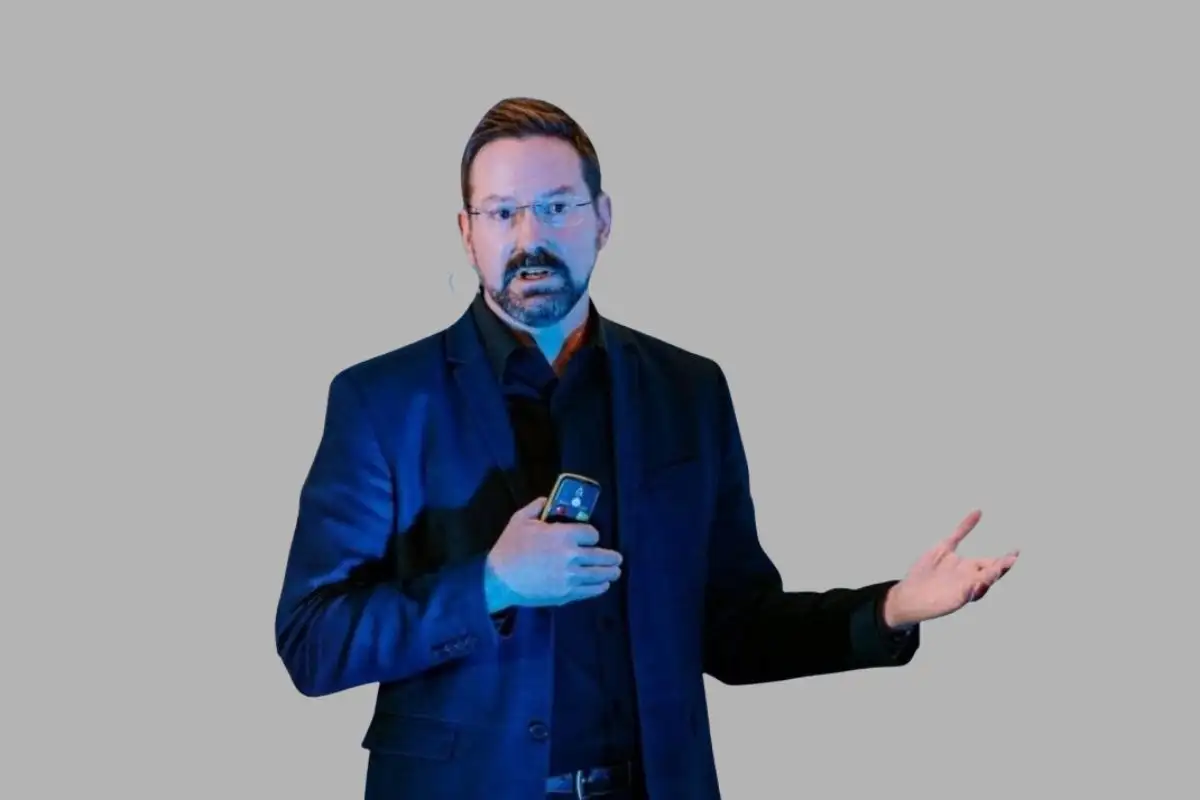
As African businesses accelerate their adoption of artificial intelligence and cloud technologies, a new challenge is emerging, protecting the data that powers these systems. According to executives from Veeam, many organisations are expanding faster than their ability to properly secure and recover their data.


Speaking to TechArena at AI Everything Kenya x GITEX Kenya, Brendan Widlake, Regional Director for English Africa and Lisa Strydom, Senior Channel and Alliances Manager for Africa, said the conversation around data is rapidly shifting but key gaps still remain.
One of the biggest shifts organisations are facing is the sheer spread of data.
“Your data is everywhere now,” Widlake explained. “It’s in your data center, in the cloud, on SaaS platforms like Microsoft 365 and across user devices.”
This fragmentation has made data protection significantly more complex, even as awareness improves. Businesses across East Africa are increasingly recognising the importance of securing their data but many are still struggling to implement best practices consistently.
While AI is unlocking productivity and automation, it is also introducing new and often misunderstood risks.
“What we’re seeing now is companies giving their data to AI systems and agents that are not always managed or controlled,” Widlake said.
This shift represents a fundamental change in how risk should be understood.
“In the past, security was about protecting against external threats — building walls around your systems,” he added. “Now, the risk is internal. You’re feeding your most sensitive data into AI systems.”
The Cloud Myth
A major misconception among businesses is that moving to the cloud automatically guarantees data protection. In reality, cloud providers operate on a shared responsibility model. This means that the provider secures the infrastructure, but the customer remains responsible for their data.
“We’ve seen many customers move to the cloud and assume their data is backed up and protected,” Strydom said. “That’s not the case.”


This misunderstanding has led to gaps in backup, recovery and overall data resilience strategies. Despite growing investment in technology, fundamental practices are often overlooked.
“You need to have backup. You need to be able to recover. Otherwise, what’s the point?” Strydom said.
Core principles such as reliable backup, recovery testing, offsite data copies and immutable backups are still not consistently implemented. In many cases, organisations deploy solutions but fail to fully utilise their capabilities.
Data Resilience Is a Priority
In response to rising cyberattacks and operational risks, companies are shifting toward a broader concept of data resilience. This goes beyond backup to include cybersecurity integration, disaster recovery, operational continuity and visibility across systems.
“Cyberattacks have exploded globally, and Africa is one of the most targeted regions,” Widlake noted.
As a result, businesses are now focusing not just on protecting data but ensuring they can recover quickly when things go wrong.
Managing Data in the Era of AI
Another emerging challenge is how organisations manage data in the age of AI. Employees are increasingly using AI tools, sometimes without oversight.
This raises critical questions such as What data is being shared? Where is it going? or Who has access? To address this, companies need stronger data classification, access controls and governance frameworks.
Veeam sees a major shift underway though. The rapid global investment in AI infrastructure, including data centers and compute capacity, is now extending into Africa.
“The next battleground will be securing and managing the data inside these AI systems,” Widlake said.
As organisations scale AI, ensuring the safety, integrity, and recoverability of data will become a defining challenge.
For these and more stories, follow us on X (Formerly Twitter), Facebook, LinkedIn and Telegram. You can also send us tips or reach out at info@techarena.co.ke.
Also Read: Building a resilient data protection strategy for the AI era