


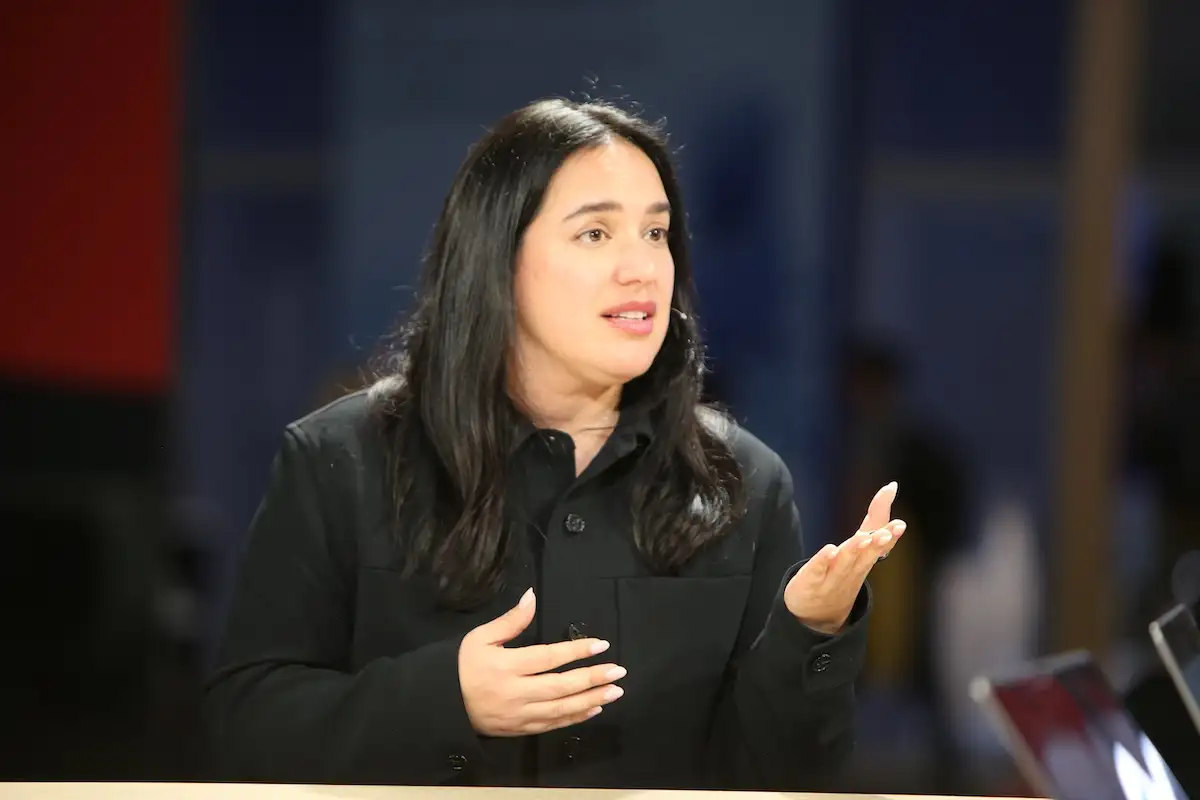
By Maria Bracho, Chief Technology Officer, Industries, Red Hat
Editor’s Note: This article is part of TechArena Executive Insights, a curated series featuring perspectives from industry leaders across Africa’s digital economy. The views expressed are those of the author.
As businesses gather at KubeCon EU 2026, the conversation has shifted from simply adopting the latest technology to driving tangible business outcomes. In my experience working with organizations looking to leapfrog technical debt, the goal is always a practical, scalable solution. Red Hat OpenShift 4.21 provides a unified foundation that helps accelerate AI innovation and simplify infrastructure modernization.
OpenShift 4.21 acts as an innovation hub, providing a platform where the entire lifecycle of a project—from metal to model to application—is managed with greater consistency. For business leaders, this means reducing complexity and costs while achieving a faster time to market.
Maria OpenShift 4.21
Let’s explore how some of the new and enhanced features across OpenShift’s key pillars deliver tangible business value.
Virtualization: Simplifying modernization and unifying fragmented operations
At Red Hat, we believe the barrier to modernization isn’t just technology; it’s the architecture choices you can take advantage of. Many organizations manage isolated infrastructure stacks: one for modern containerized apps and another for legacy virtual machines (VMs). Red Hat OpenShift 4.21 provides a universal hub where both run side-by-side with minimal downtime. By bridging the chasm between these twin critical operations, businesses can help eliminate the cost of maintaining disparate systems and redirect those resources toward innovation.
- OpenShift Virtualization: This allows businesses to move critical legacy applications directly onto the OpenShift platform, both in their own datacenter or in a variety of hyperscaler environments, now including Google Cloud bare metal.
- Cross-cluster live VM migration: This is a massive quality of life upgrade for operators. Businesses can now more easily move large legacy databases between clusters for maintenance without taking systems offline, delivering continuous operation for critical applications.
- Migration toolkit for virtualization 2.11: This toolkit accelerates migration projects. Using storage offloading, MTV 2.11 can migrate massive amounts of data up to ten times faster by moving data directly between storage units, avoiding network congestion.
- OpenShift Migration Advisor (OMA): This no-cost, automated tool provides a migration readiness report that assesses existing VMware workloads, eliminating the cost of discovery.
This unified approach allows teams to treat their entire infrastructure as a single, flexible pool of power. An animation studio, for example, can utilize high-performance clusters to render film frames during the workday, then use cross-cluster live migration to shift those same resources to handle global content distribution updates at night. As another use case, this time in the insurance sector, the Migration Advisor allows teams to identify quick-win workloads for immediate migration, replacing uncertainty with a data-driven roadmap.
AI: Removing guesswork from infrastructure costs
Integrating AI often means complex hardware allocation. OpenShift 4.21 addresses this by transforming AI infrastructure from a static expense into a transparent, utility-based model that scales with demand. This transparency is critical for organizations that must explain their technology stack to regulators as well as the public.
We have achieved this by moving attribute-based GPU allocation and Dynamic Resource Allocation (DRA) to general availability, which helps eliminate hidden costs by automatically matching specific project needs with expensive hardware. Businesses only pay for the exact computing power their models require. Furthermore, with prioritized alternatives, if a primary resource is unavailable, the system can automatically fall back to a predefined alternative, helping to ensure operations continue and forecasting is based on actual usage. For instance, a financial firm can now automatically assign top-tier GPUs for real-time fraud detection while shifting to more cost-effective hardware for weekly reporting.
By automating these complex management tasks, OpenShift helps keep high-cost hardware from idling while waiting for manual configuration, in effect costing resources without providing value. For instance, a financial firm can now automatically assign top-tier GPUs for real-time fraud detection while shifting to more cost-effective hardware for weekly reporting. Similarly, a healthcare network can prioritize high-compute instances for AI-assisted MRI analysis during peak surgery hours, then automatically redirect those resources to handle encrypted billing batches overnight—maintaining both performance and strict data compliance.
Core: Building a more resilient, automated foundation
The foundation of OpenShift has been strengthened in 4.21 to improve efficiency and reduce operational overhead, designed to act as a smart utility for your data center. We have significantly reduced cloud costs by introducing autoscaling to and from zero, which powers down unneeded capacity the moment a task is finished. This is bolstered by dynamic scaling for Hosted Control Planes and the general availability of the IPv6-only control plane, providing much-needed network flexibility and scaling precision. For extremely security-focused environments, Confidential Containers on Microsoft Azure allows organizations to create hardware-based, encrypted environments for executing sensitive applications, ensuring data remains protected even during processing.
For instance, in an e-commerce setting, this allows a retailer to scale every available thread to checkout and inventory services during a high-stakes flash sale, then automatically “power down” that extra capacity once the sale ends to keep utility costs at a minimum.
Blazing a unified trail to innovation
Red Hat OpenShift 4.21 helps to accelerate AI innovation while simultaneously simplifying infrastructure modernization. By allowing businesses to run, manage, and migrate VMs and containerized apps side-by-side with minimal downtime, organizations can eliminate the cost of maintaining separate silos and free up resources to focus on the future.
For these and more stories, follow us on X (Formerly Twitter), Facebook, LinkedIn and Telegram. You can also send us tips or reach out at info@techarena.co.ke.
Also Read: Red Hat OpenShift AI achieves ISO 42001 AI certification