


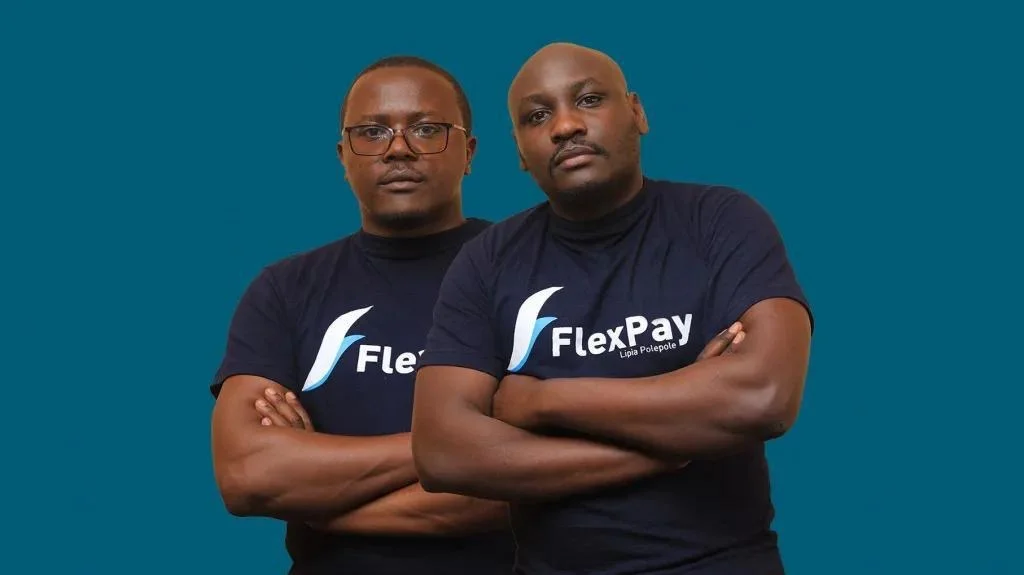
When Johnson Gituma talks about financial empowerment, his conviction is grounded not in theory, but in lived experience. As Co-Founder and Chief Operating Officer of Flexpay, Gituma is helping reshape how Africans access goods and services, emphasising disciplined saving and intentional spending over debt.
Flexpay, a Kenyan-born fintech platform pioneering the Save Now & Buy Later (SNBL) model, didn’t emerge from a boardroom brainstorm. Instead, it was inspired by a simple but powerful question repeatedly asked by ordinary people: “Can I pay in instalments?”
Gituma began his journey at Kenyatta University, where he studied Energy Engineering. The discipline honed his problem-solving mindset and exposed him to sustainable innovation, skills that would later define his entrepreneurial path.
Before Flexpay, Gituma co-founded a biogas energy startup focused on rural farmers. The team developed a portable biogas digester moulded from recycled plastic, providing an affordable, quick-to-install alternative to traditional concrete digesters. The idea attracted support and funding from organisations like WWF and the Kenyan government. However, they faced a recurring challenge: the upfront cost was still too high for most farmers. Nearly all asked the same question: “Can I pay for it in instalments?”
This challenge sparked the idea behind Flexpay: to help people purchase essential items without taking on debt. “It became clear that there was a need to sort out the payment struggle. Around the same time, my friend and now co-founder, Richard Machomba, encountered a merchant seeking a digital solution to manage instalment purchases in his shop. Two industries, energy and retail, were asking for the same thing: a trusted, flexible instalment and savings platform. That insight became the seed for Flexpay,” Gituma shares.
In 2017, Gituma and Machomba set out to build a solution that empowers people to Save Now & Buy Later, whether shopping for electronics, paying school fees, booking travel, or purchasing furniture, solar products, or insurance. The journey was challenging. Neither founder had technical expertise, and it took nearly three years to develop a working prototype. Limited resources meant relying on engineers who often left mid-project, slowing progress and testing the founders’ resilience.
Things changed when Moses Gathecha joined as Chief Technology Officer, bringing much-needed leadership and technical direction. The team was further strengthened with Dennis Karanu, who led marketing and growth strategy, and Martin Maina, who introduced strong financial systems and operational rigour. Their combined skills transformed Flexpay from a struggling concept into a structured, scalable fintech business.
“Just as we began to gain momentum, COVID-19 hit, and many of us onboarded businesses shut down permanently. Flexpay had to adapt, rebuild, and eventually relaunch in 2021, stronger, clearer, and more focused,” recalls Gituma.
So, who is Flexpay built for, and what does it do? Flexpay operates under a B2B2C model. It’s designed for business owners who want to offer flexible, savings-based payment options that increase affordability and customer retention. It also serves consumers: anyone can download the Flexpay app, set a savings goal, pay gradually, and check out from a growing network of trusted brands. “Today, our merchant network includes leading brands such as Naivas, Quickmart, Hotpoint, Moko, LG, MIKA, Car & General, Azon, and many others, with more joining as demand for flexible purchasing grows,” Gituma notes.
Flexpay stands out for its philosophy. For businesses, it offers access to a growing pool of committed savers, higher conversion rates, fewer abandoned purchases, and increased customer loyalty. For consumers, it enables them to buy essential goods and services without debt or pressure, with flexible instalments aligned with their real income. It fosters financial confidence, dignity, and intentional spending habits.
By turning savings into a gateway for access, Flexpay is quietly reshaping how Africans shop, plan, and build financial resilience.