


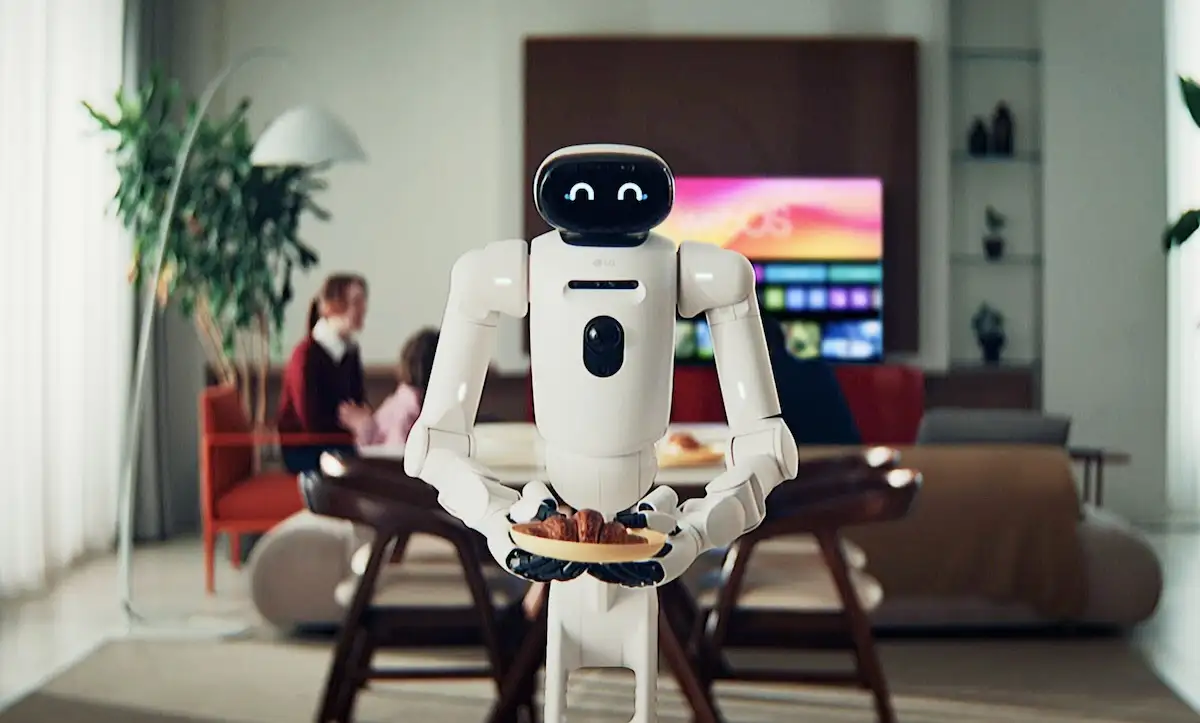
For much of the past decade, AI in consumer technology has been designed to demonstrate capability. New devices have been responding to voice commands, showcasing automation features, and emphasizing visibility as proof of intelligence. Today, however, leading innovators are moving toward a more mature paradigm, where it is no longer about performance but about integration. It is about intelligence that works quietly, coordinating systems, improving efficiency and enabling better outcomes without demanding attention.
This shift reflects a broader evolution in innovation strategy, with early stages of technological adoption often defined by feature expansion and user interaction. As markets mature, differentiation comes from reducing complexity rather than adding new layers of functionality. At LG’s InnoFest MEA showcase, in Abu Dhabi, UAE, earlier this month, this transition was evident with AI positioned as an invisible operating layer across the home. Instead of presenting intelligence as a standalone capability, the focus was on orchestration, where devices collaborate to create a seamless environment.
From an innovation leadership perspective, this marks a transition from reactive AI to contextual intelligence. Reactive systems depend on direct commands while contextual systems interpret data across multiple inputs, including user habits, environmental conditions and device interactions. Appliances that coordinate energy consumption across the home, exemplify how AI can deliver measurable improvements without increasing cognitive load on users.
At LG InnoFest MEA, several categories of innovations illustrated how this philosophy translates into real-world ecosystems:
AI-enabled home appliances
- LG AI Direct Drive washing machines and dryers that analyze fabric types and usage patterns to optimize cycles, demonstrating how intelligence reduces manual decision-making.
- LG InstaView refrigerators with smart cooling and inventory awareness, showing how AI shifts from reactive temperature control to proactive freshness management.
- LG Smart cooking solutions that integrate sensors and automation to streamline preparation while maintaining efficiency.
Connected home climate and energy systems
- DualCool and AI-powered air conditioning solutions that adapt to environmental conditions and occupancy patterns, illustrating how AI balances comfort with energy optimization.
- Air purification technologies that monitor indoor air quality continuously, reinforcing the idea of invisible intelligence working in the background.
Entertainment and lifestyle platforms
- OLED and QNED televisions powered by advanced AI processors that personalize viewing experiences while simplifying setup and calibration.
- ThinQ-connected ecosystems that allow devices to communicate and coordinate, highlighting orchestration as the core of next-generation innovation.
Each of these products reinforces the narrative that AI is no longer confined to a single device or feature, but exists as a connective layer that enables devices to learn, adapt and collaborate. The result is a home that operates more like an integrated system than a collection of standalone technologies.
This approach aligns with emerging consumer expectations with research consistently showing that users prioritize reliability, efficiency and simplicity over visible complexity. In other words, the most successful technologies are those that feel natural rather than disruptive. Invisible intelligence reduces friction by eliminating the need for constant decision-making, allowing technology to operate as infrastructure and not just an interface.
For manufactures, this raises important strategic implications. First, innovation increasingly depends on ecosystem thinking and standalone devices cannot deliver the same value as interconnected systems that are capable of sharing insights and adapting collectively. Second, differentiation shifts toward software-driven experiences powered by data integration and machine learning. Hardware remains essential, but its competitive advantage comes from the intelligence embedded within it. Systems that dynamically optimize performance based on real-time conditions can reduce waste while improving user outcomes. As was showcased in LG’s various presentations at LG Innofest 2026 MEA, incremental efficiency gains across millions of connected devices translate into meaningful environmental impact, reinforcing the role of AI as both a commercial and societal enabler.
For these and more stories, follow us on X (Formerly Twitter), Facebook, LinkedIn and Telegram. You can also send us tips or reach out at info@techarena.co.ke.
Also Read: What LG InnoFest Revealed About the Future of Everyday Living